
WordPress, custom-built · Music
Maestro Gianni Aterrano
The official website of a master of Neapolitan song: the menu is a keyboard you can play, and the concert at Teatro Diana lives on in twenty-five videos.
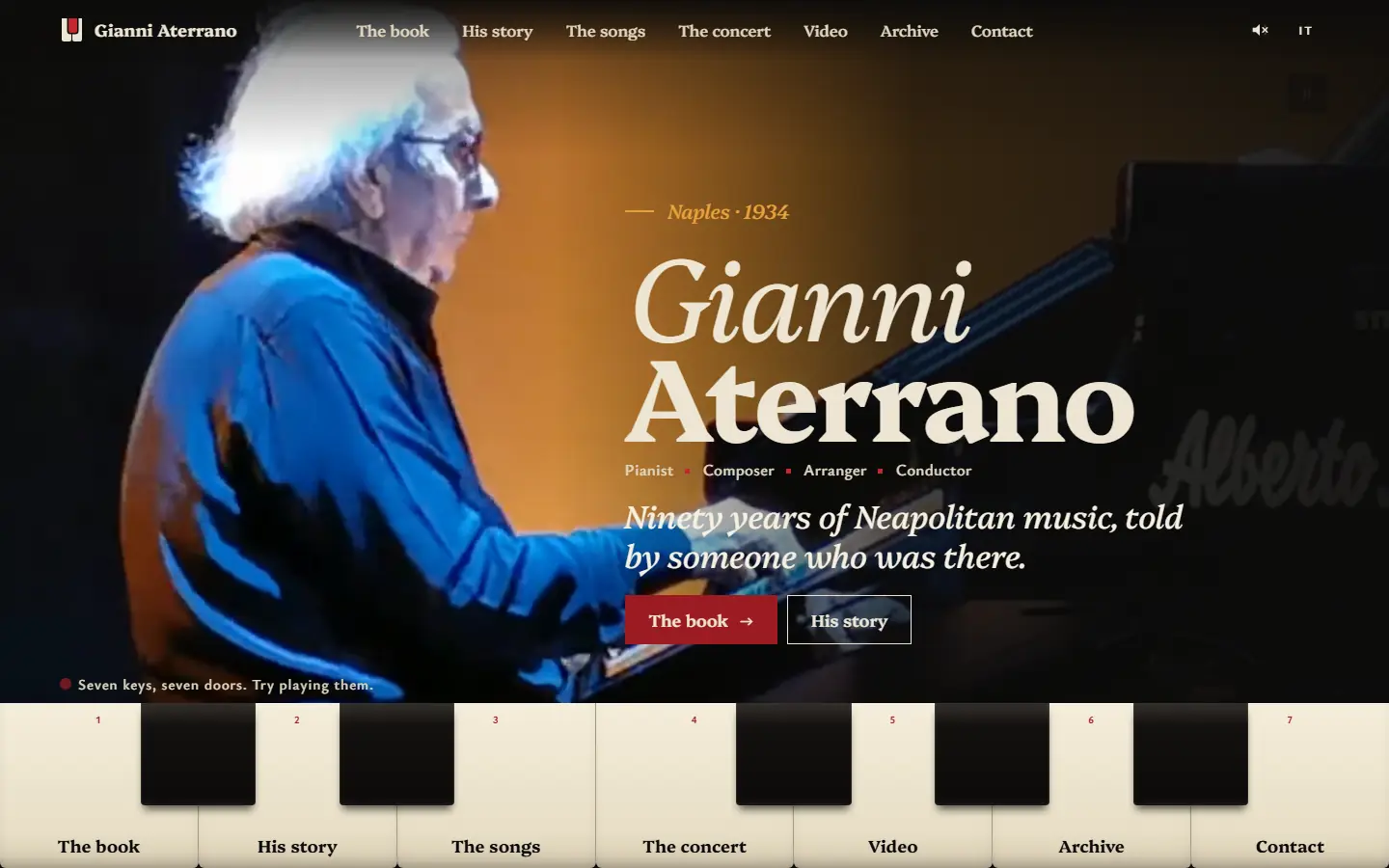
Maestro Gianni Aterrano is a pianist, composer, arranger and conductor. Born in Naples in 1934, for decades he accompanied and arranged for the great voices of Neapolitan song, from Sergio Bruni to Aurelio Fierro and Tony Astarita. In 2026 he told the story of his life in the book ‘Le note della mia vita’. The old website had four pages and hadn’t changed since 2013: the new one had to let people hear his music and put a lifetime’s story in order for enthusiasts, the press and concert organisers.
What we built
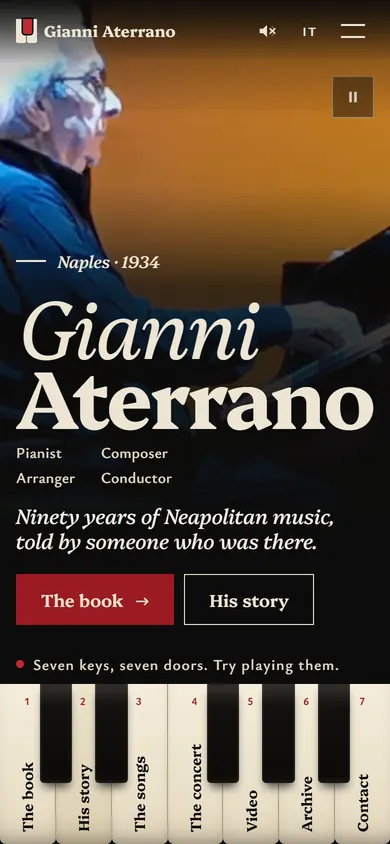
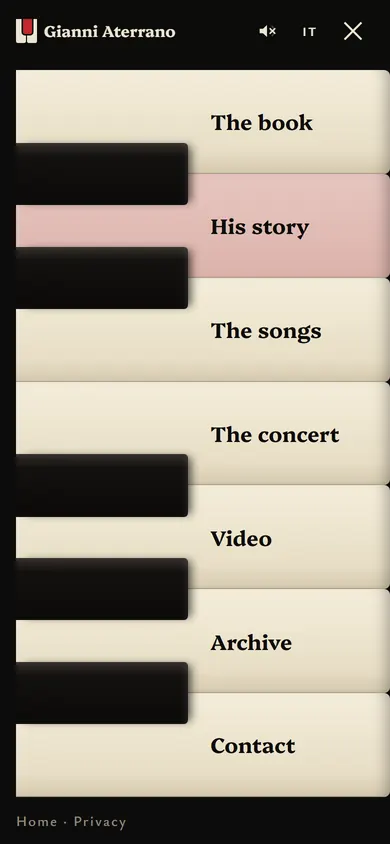
- A menu you can play. The seven menu items are the seven white keys of a piano, and each key has its own note, synthesised in the browser. Sound starts off and only comes on if the visitor chooses.
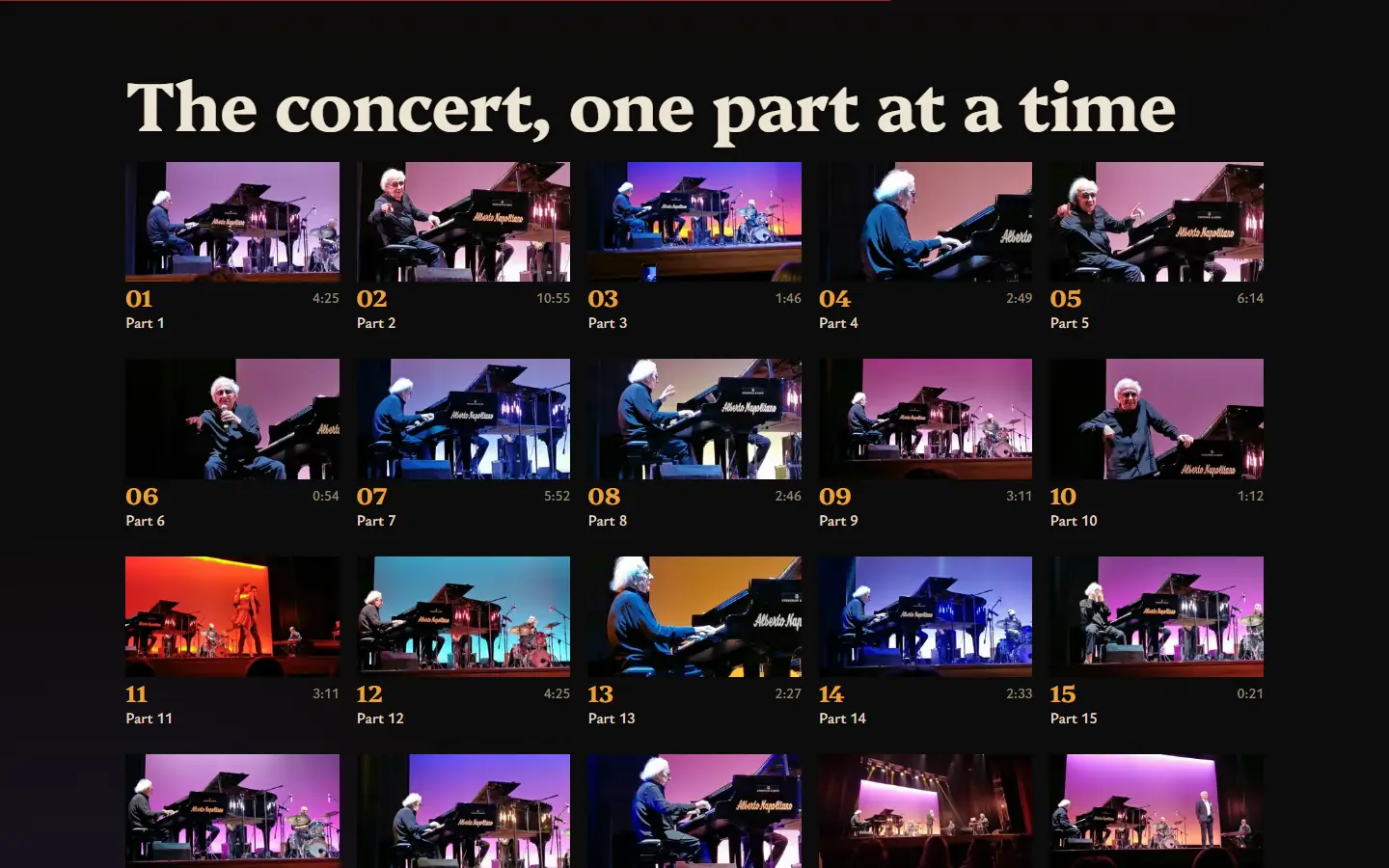
- The Maestro on stage. You enter with a short silent video of the Maestro on stage at Teatro Diana. The page for the concert of 21 June 2019 gathers it in twenty-five videos, one part at a time: the YouTube player only loads on click, and without cookies.
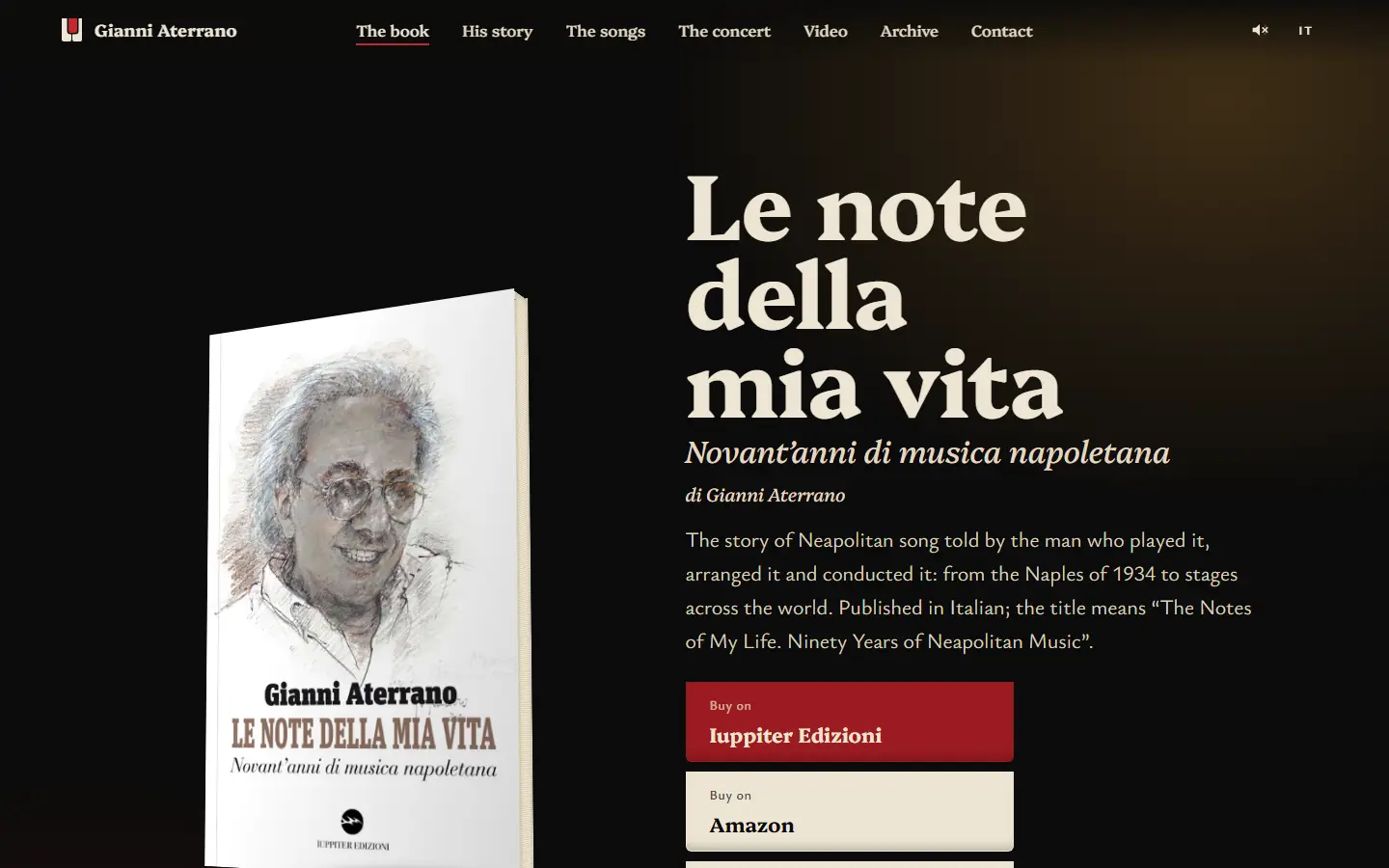
- A story written from the facts. Biography, milestones and songs are rewritten from the book and from the Maestro’s own account, with every detail checked. The book has its own page, with a 3D cover and links to buy it from the publisher and from online bookshops.
- The archive, restored. The archive photographs have been through a conservative restoration and are prepared in lightweight formats: they’re easy to browse on a phone too.
- An identity made of keys. The graphic mark comes from the keys of a piano. Lacquer black, ivory, felt red and amber, two typefaces chosen for headings and text, and not a single rounded corner give the site the tone of a concert hall.
- A theme written from scratch. WordPress with no plugins and no page builder, in Italian and English. Every address on the old site leads to the right new page. Structured data describes the person, the book, the concert and the songs to search engines and AI assistants.
- Respect for visitors. Until a cookie choice is made, the site saves nothing and calls no external services: analytics only start with consent. The contact form defends itself against bots without third-party captchas, and the pages pass automated accessibility checks with no errors, on desktop and on mobile.
What we add
The difference is that the site plays. A musician’s website usually shows photographs and a list of dates, while the music lives elsewhere, on YouTube or the streaming platforms. Here the keyboard is the menu, the Maestro appears on stage the moment you arrive, and the concert can be watched again part by part without leaving the site. Visitors hand their data to no one until they choose to.
When it makes sense. If you’re a musician or a songwriter, or you look after an artist’s archive, the website can be the place where their story stays in order: book, music, video and photographs told in the same voice and in two languages.
Inside the website
A keyboard that opens the door to his music.
The concert at Teatro Diana to watch again section by section, the book page with the shops that sell it and the piano-key menu on the phone, where a note plays only if the visitor turns the sound on.
More case studies.
Natalia Celiento
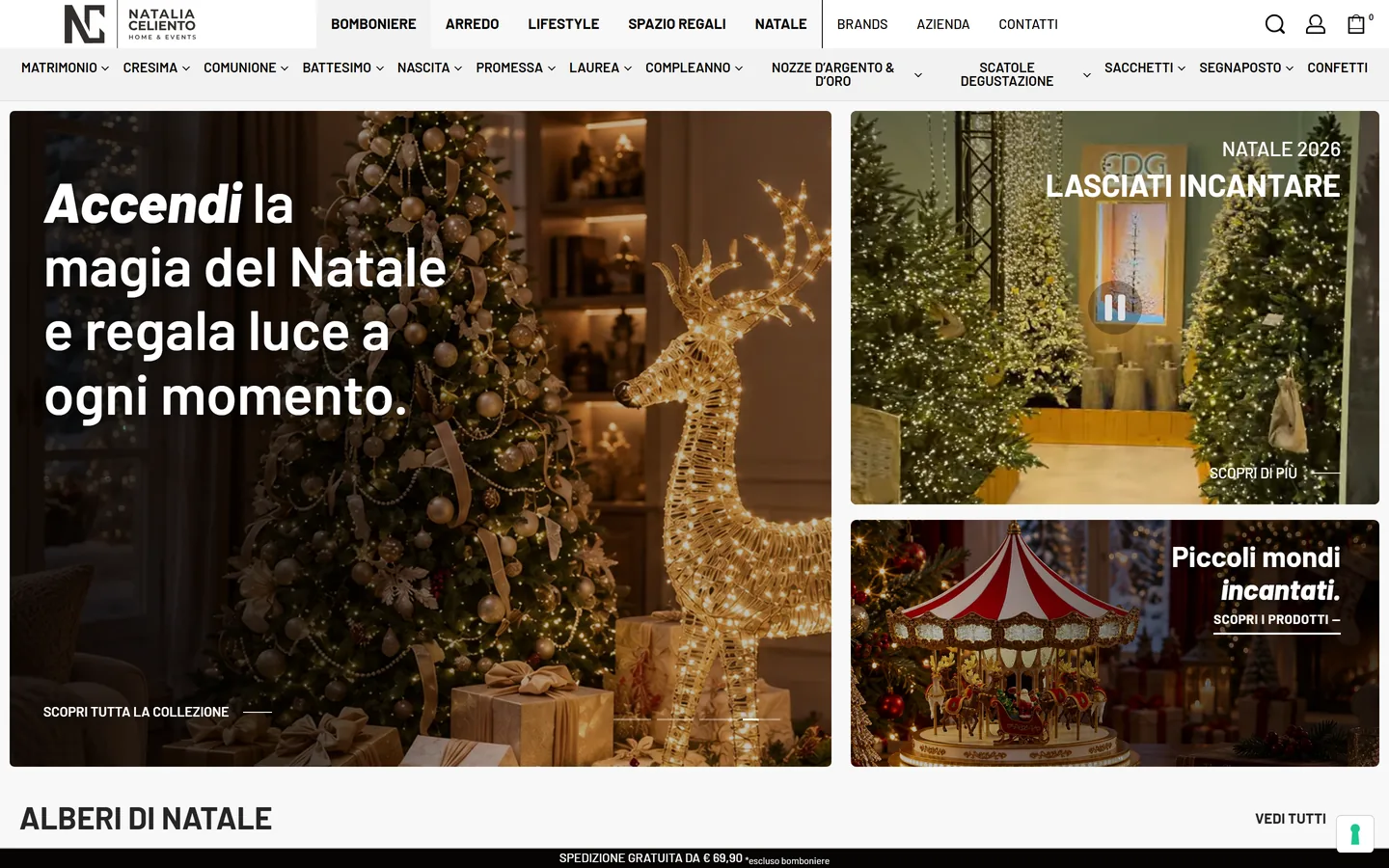
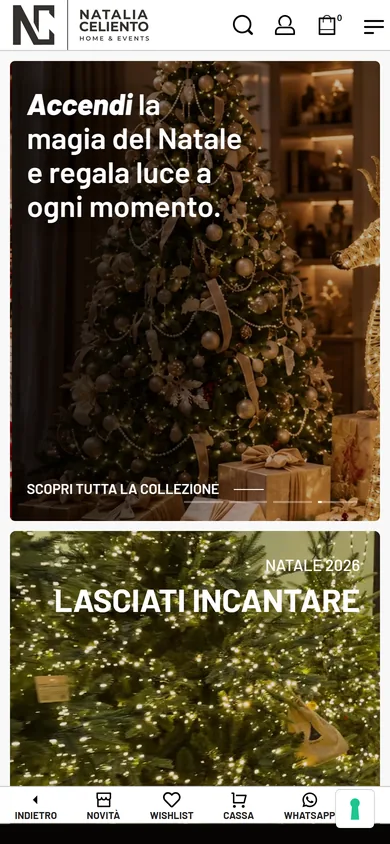
nataliaceliento.itA home decor shop that keeps pace with the management system: every five minutes it shows stock, hides sold-out items and applies minimum quantities.
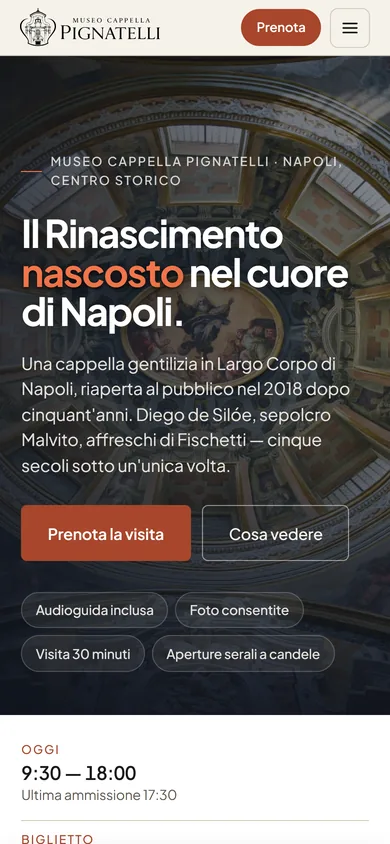
Museo Cappella Pignatelli
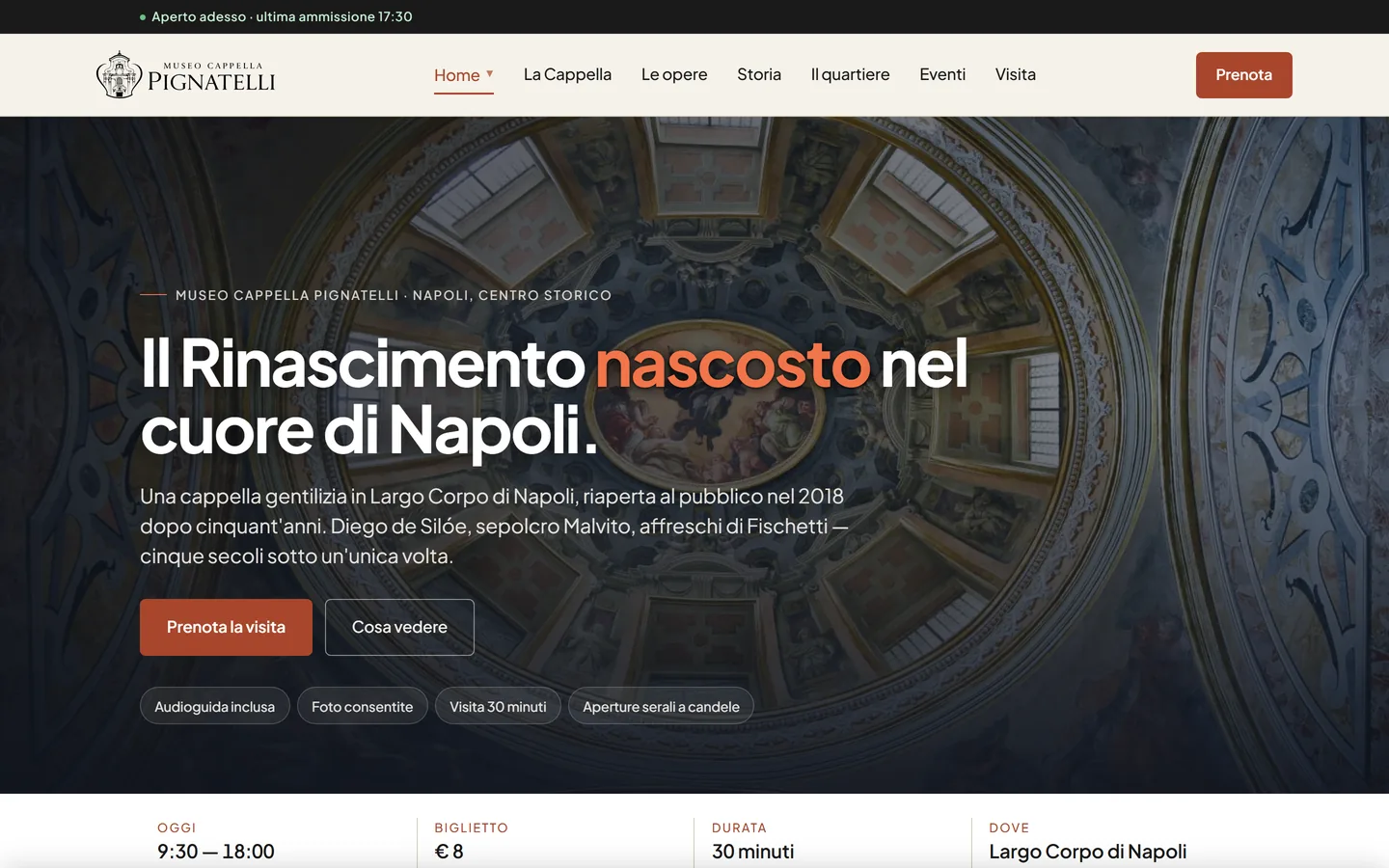
museopignatelli.itFrom logo to ticketing: identity, an editorial website and BeezWoo Tickets, with one QR code for the whole booking and an entry gate that works offline.
Have a book or an album to bring online?
Tell us about your book or music project: what you already have, what you want readers and listeners to find and when it comes out.
Or email us at [email protected]
 Tools, not shop windows
On a computer?
Scan the code with your phone and message us on WhatsApp.